Allison Pataki‘s Sisi (The Accidental Empress and Empress on Her Own) is one of the most interesting and accurate historical novels I’ve read recently. The story engages you in Sisi’s life in a very big way. All her troubles and misfortunes, all her insecurities, eccentricities, the happiest moments of her life become part of you while you are reading Pataki’s novel. For me, this is a sign of a great literary achievement.
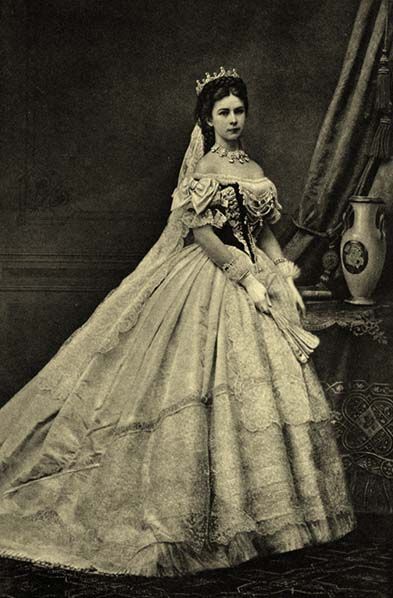
Empress Elisabeth’s Hungarian coronation gown by Charles Frederick Worth;
Credit – Pinterest
The Accidental Empress shows a young girl who’s failing at finding her place in the strict and cold imperial court of the Habsburg Empire. The second book indeed shows Sisi as an empress on her own, troubled by so many things in her life, finding solace in riding and travelling the world. Sisi was an extraordinary woman, who started her life as a happy and free-spirited girl, whose spirit was slowly broken by the strict rules and protocol she was forced to obey in the court in Vienna. She was ill-prepared for her role as an Empress and too young to take on all the burden upon her shoulders. A 16-year old girl who was dreaming of her perfect prince, perfect love and life in a fairytale. However, the reality struck her hard, resulting in the melancholia that became her constant companion for the rest of her life.
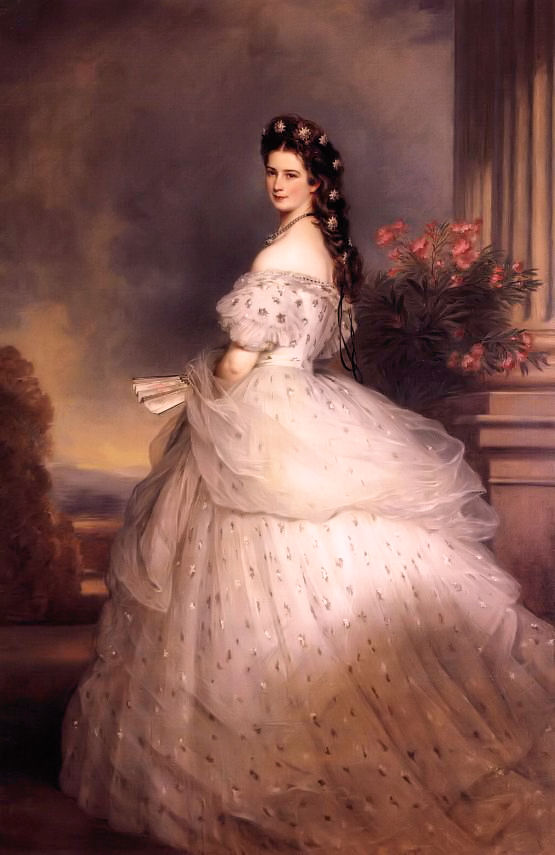
Portrait by Franz Xaver Winterhalter, 1865;
Credit – Wikipedia
In the beginning, Sisi did try to fit in the role she was thrown in- she tried to be a good wife and a good empress, but the restricting rules came too much for her free spirit to bare. The interference of her mother-in-law in Sisi and Franz Joseph’s marriage was also something she was struggling to fight. The real tragedy, though, came when Sisi lost her first daughter. The grief mixed with blame hit her so hard that she started believing what the others were telling her- that she was incapable to raise children. This resulted in her alienating herself from her other daughter Gisela– a gap that was never overcome for the rest of Sisi’s life.
The birth of her first son, crown prince Rudolf, lifted Sisi’s spirits but her happiness didn’t last long; Rudolf, just like his sisters before him was taken away from Sisi to be raised by her much more capable mother-in-law archduchess Sophie. To add to the pain, Sisi found out her husband was accepting other women in his chambers while she was mourning the loss of their daughter. This, in my opinion, was the first pivotal moment in shaping Sisi’s personality in the years to come. This was the first time she abandoned her duties as a mother, wife, and empress and went on one of her many travels abroad.
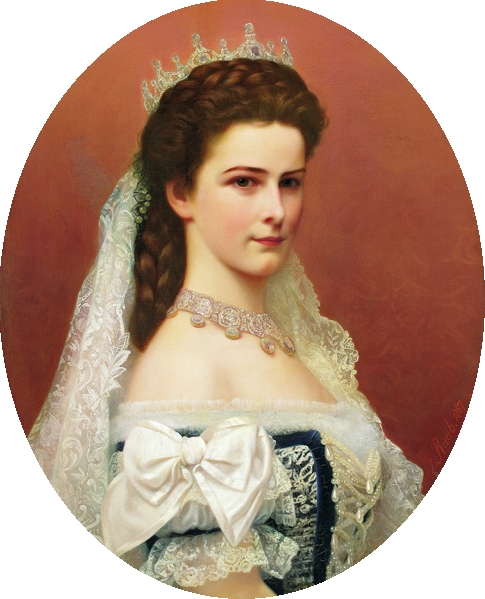
Empress Elisabeth of Austria by Georg Raab, 1867; Credit – mimimatthews.com
I think Sisi is an example of why monarchies were abolished in so many countries at that time. Her luxurious life, her expensive travels, gorgeous gowns and hours-long beauty procedures were in a huge contrast with the way common people of the empire were living; poverty, suicide, and illness were the reality for many of them.
Sisi wasn’t an active politician, she was avoiding all her official duties as much as she could and was wasting a lot of money on her travels and hobbies. In my opinion, though, the biggest failure in her life was the one of a mother. The trauma of losing her first daughter and then being stripped of her other children made her selfish and estranged. The only child she was favouring was her last daughter Valerie, the only child she was allowed to raise herself. This is why Sisi became somewhat obsessed with her and completely abandoned her other two children.

Archduchesses Gisela and Marie Valerie of Austria;
Credit – Pinterest
Gisela found the mother she needed in the face of Sophie, but Rudolf resembling Sisi not only by looks but by personality as well, needed his mother more than anyone else. He was the only child that was just like her- sensitive, fragile, visionary. This is why he was the most inappropriate heir to the great Habsburg throne. He lacked the stoicism and discipline of his father and just like his mother, remained misunderstood by the people around him.
Rudolf’s relationship with his father has been tense since an early age and with a mother who was always away, he found a confidant in his older sister Gisela. When she married and left Vienna, though, Rudolf’s downfall began. For me, this is when Sisi made her biggest mistake. She knew what her son was going through, she knew deep inside that she was the only person who could help him and yet, she did nothing to save him. She continued favouring Valerie over the others, which broke Rudolf even more; he was longing for his mother’s love and attention. No wonder the crown prince grew up to be unstable and broken, cruel at times, addicted to opiates, alcohol, and women. When Rudolf committed suicide the blame struck Sisi very hard and this is the stroke she never fully recovered from.

Crown Prince Rudolf of Austria;
Credit – Wikipedia
I believe Sisi loved Rudolf very much, but she never felt he was hers. He was taken away from her as a baby and being a crown prince, he was never allowed to accompany her on her travels or be part of her lifestyle. The two of them were deeply connected but never had the opportunity to develop this connection into a proper mother-son relationship. As a result, both their lives were ruined because Sisi was longing for Rudolf when he was a small boy and Rudolf was longing for his mother when he was a grown man. The two of them could have healed each other’s wounds but they never found the path to one another.

Sisi and Franz Joseph; Credit – Pinterest
I feel I should dedicate a paragraph to Franz Joseph as well. He was a good person, with good intentions, who was always doing his duty. He was deeply in love with Sisi, but his duty and the empire would always come first. Franz was an epitome of an emperor- someone who gives himself in service to his empire and his people, someone who sacrifices his personal life, his wants and needs. Those qualities cost him his marriage and the love of his life, but this is how he was raised to be.
I deeply sympathize with Franz cause his life was very difficult, bound by duty, but he stood strong and bore all tragedies in his life with dignity. The moment I felt most difficult to read in both books was when Franz received the news of Sisi’s assassination. The way this strong man broke into tears was described so graphically that you can’t help but feel for him. His love for Sisi was very deep and very tender and never fade away.

Emperor Franz Joseph in 1853; Credit – Wikipedia
I personally like Sisi, she was a very charismatic woman who’s persona continues to fascinate people 119 years after her death. I believe she was a good person, with many imperfections indeed but with good intentions and a good heart. She was very sensitive and very fragile and her drama is that she remained misunderstood her whole life. Sisi is an inspirational woman and if you don’t learn from her actions, learn from her mistakes.


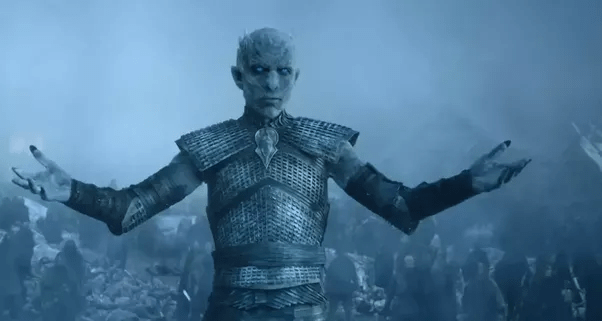
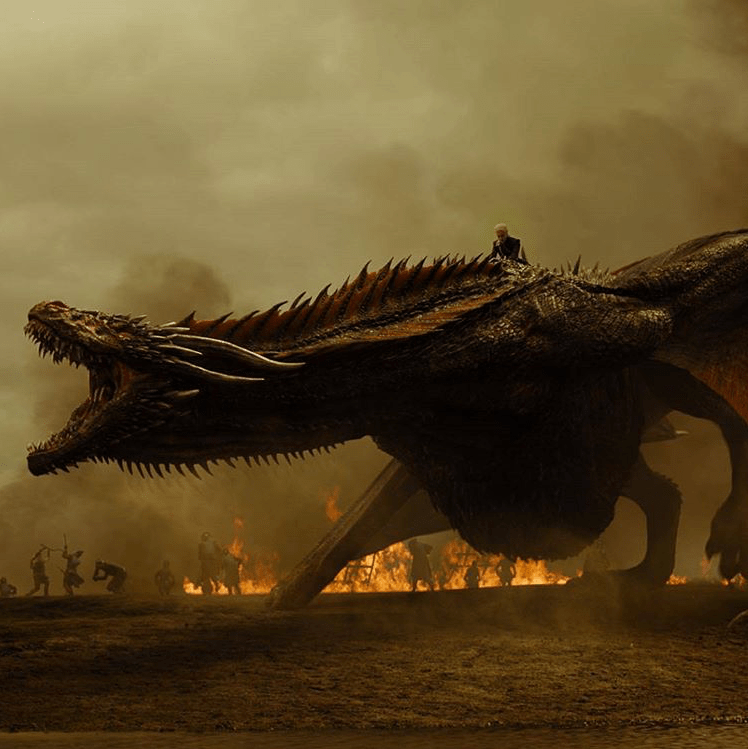

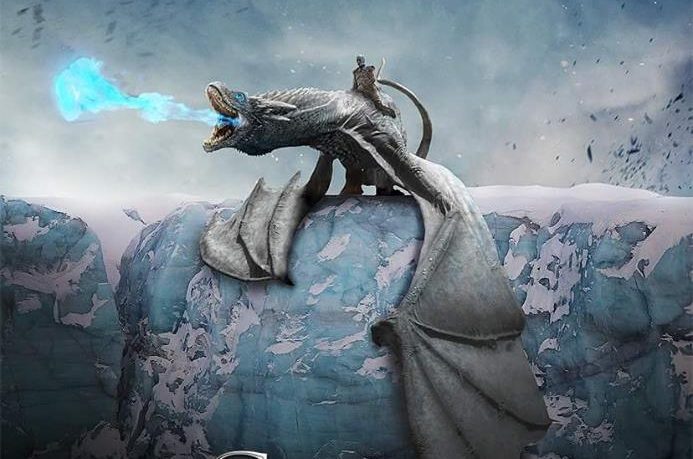
 That is why the Night’s Watch recruiter Yoren was sent down to King’s Landing to present King Robert with a body part of the Wight they managed to defeat in Castle Black and convince him to send an army north. However, he arrived at a bad moment- when everything had already started to fall apart; King Robert died, Ned Stark was beheaded and the war for the Iron Throne started, leaving no room in anyone’s mind for the possibility of the existence of White Walkers beyond the Wall. Now, seasons later (in the world of Game of Thrones it would be years) the war is still going and still, no one believes the existence of the Walkers. Jon Snow understands he cannot defeat the Night King and his army alone. The North, no matter how strong it might be, is not enough. That is why Jon went on this suicidal mission with the desperate hope to achieve two main things – 1) to somehow capture a Wight and present him to Queen Cersei and this way convince her to fight the Night King and not Daenerys for the time being; and 2) to make Daenerys follow him to the Wall with her dragons and see the threat for herself. That is why I think the mission was not in vain, even if it was suicidal. But Jon’s gone on many suicidal missions already – the Battle for the Wall, Hardhome, the Battle of the Bastards to name but a few – so going beyond the Wall to capture a Wight shouldn’t really be a surprise.


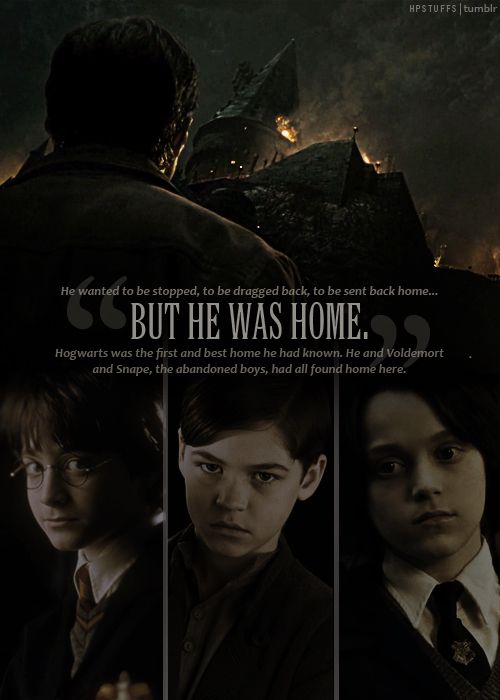
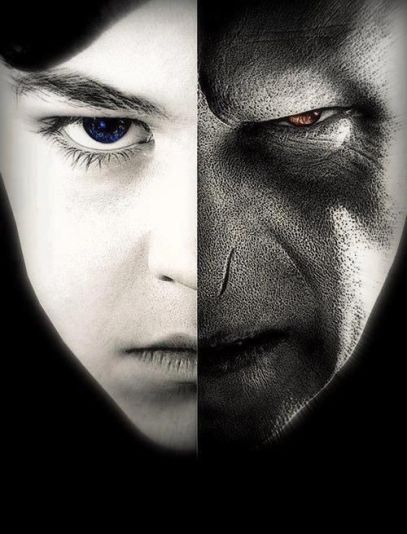 Voldemort, who is a product of love magic his mother performed on his muggle father, is not capable of feeling love for anyone for that sole reason. I think what J.K. Rowling is trying to say here is that love cannot be forced. You cannot force someone to love you, but you can force them to be with you nonetheless, and the result could be devastating. Voldemort grew up as a lonely, orphaned child with no one to count on in this world but himself. He was cruel from an early age, feeling that he was very different from those around him. The pivotal point in his behaviour, though, is when he finds out he’s a direct heir of Salazar Slytherin; this leads to him believing he’s greater than all muggles and certainly greater than most wizards. His vanity led him to do terrible things. He had a weak spot, though. It’s true he didn’t feel love for any living creature, but he did love one thing in particular-Hogwarts, the only home he ever knew. This is the one thing him, Snape and Harry have in common, the limitless love they have for Hogwarts.

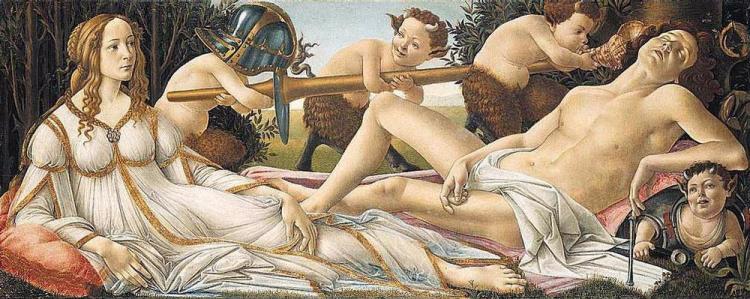
 meaning the Sun and Moon to be positioned in the same sign (between 0° and 3° of each other), especially if it’s the man’s Sun and the woman’s Moon. This is one of the aspects that also determines a successful marriage, so it’s really good if you have it with your partner or love interest. Trine (120° with up to 4° orb) and sextile (60° with an orb of up to 2°-3°) are also good, but the conjunction here is the most powerful. A good aspect between the Sun and the Ascendant and/or the Moon and the Ascendant are also very positive and give a long-lasting and very harmonious relationship.
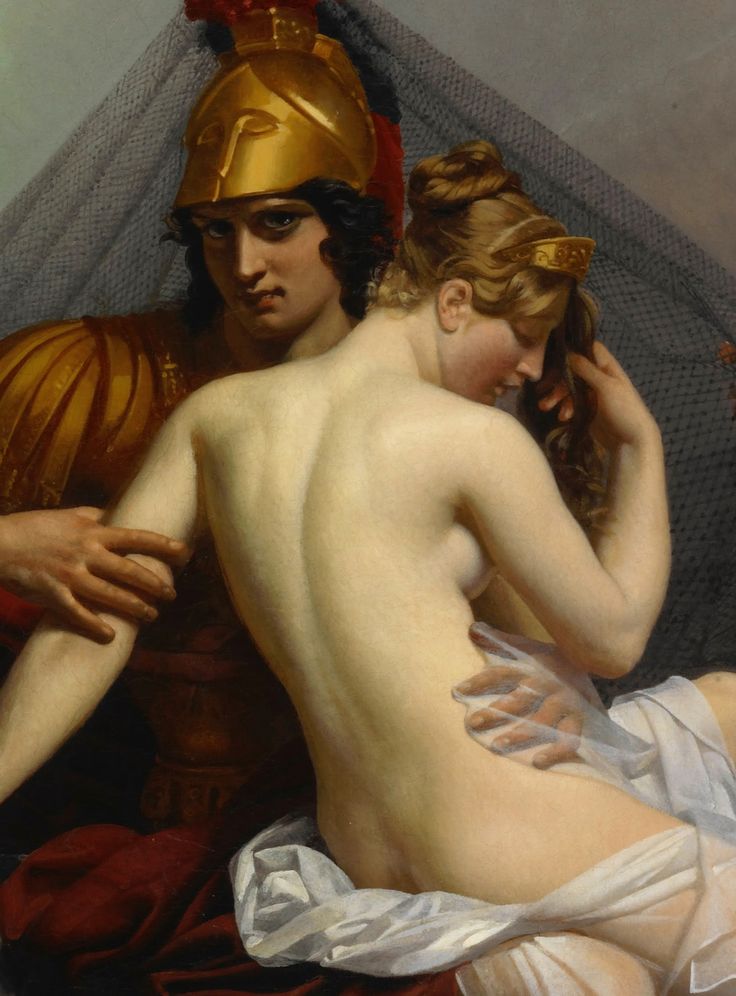 Any aspects between Venus and Pluto and Mars and Pluto make up for a very interesting relationship. Venus in any aspect (both harmonious and challenging) to Pluto indicates for very intense and deep feelings. In the case of Mars and Pluto, though, if the aspect is hard, this could add violence to the relationship. Similarly, an aspect between the Moon and Pluto and the Ascendant and Pluto brings on a lot of physical and emotional attraction as well as obsessiveness between the partners.

















 Cersei has finally sat on the Iron Throne. Her own path has been a long and not necessarily an easy or pleasant one but she made it- she got the power. No matter how badass, cruel and treacherous Cersei is, one cannot help but admire her strength, ambition and dedication to her family. Cersei’s downfall started with Joffrey’s death with her not seeing happy days until the very last episode of season 6. She’s lost her father, her daughter, her younger son, she’s been taken prisoner and humiliated by the Sparrows who forced her to go naked on the streets of Kings Landing, hearing the mocking laughter of the crowd. She’s been surrounded by enemies all the way through, so no wonder she’s gone mad. With the death of Tommen, she’s lost every bit of humanity she’s ever had in herself. Many people argue this is when she’s gone mad when Qyburn presented her to King Tommen’s dead body; however, I think the last drop that spilt the glass for her was when Tommen terminated the trial of combat practice in the Seven Kingdoms. This is when Cersei found herself into a trap, betrayed by her own son and unable to escape whatever punishment the Faith has prepared for her. And this is when something clicked into her head and when she was ready to do anything no matter the cost. Even the life of her last child didn’t matter anymore. Blasting the Sept of Baelor with wildfire and killing all her enemies, who were waiting for her inside to tear her into pieces marked the beginning of her reign as the Mad Queen. Next season will be very interesting for her as we are expecting one of her brothers to finish her- Jaime who spoiled his honour once to stop the Mad King from doing what Cersei has done and is doing now; and Tyrion who hates Cersei in the guts and who’s now Hand of Queen Daenerys Targaryen. Tough times upon the Mad Queen, ay.
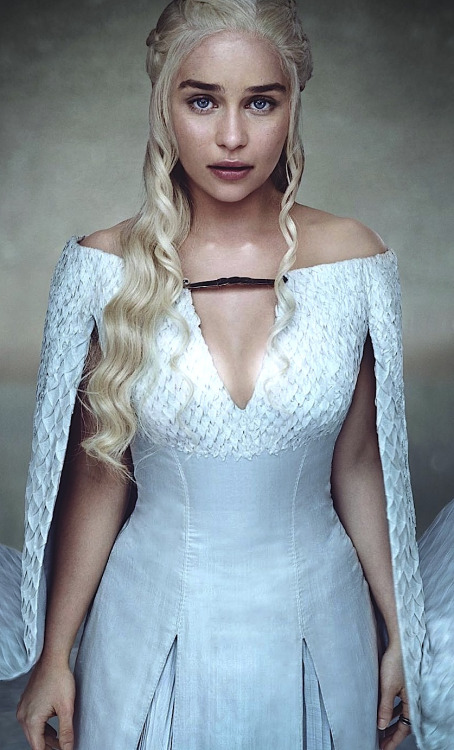 Season 6 is my favourite in terms of Daenerys’ storyline. So much has happened to her in this one season than in whole 4 previously (not counting season 1, which marks the beginning of her journey and reign). She’s found herself captured by the khalasar of Khal Moro who wants to sell her into slavery, but upon learning that she is a Khaleesi and the widow of Khal Drogo, decided to send her to the Dosh Khaleen where she’s supposed to spend the rest of her days. In this situation again we find Daenerys stuck and very far from her main purpose, namely conquering Westeros with her army and dragons. However, like some of the other main protagonists in Game of Thrones, Daenerys has a powerful magic inside her that helps her defeat every obstacle that comes down her path. In this case, the Mother of Dragons used her ultimate weapon- fire- to get rid of all the mighty khals and join the entire khalasar to her army. For me, this was one of the best scenes in season 6 and a reminder of Danny’s real power. In seasons 4 and 5 she seemed weak and completely lost, pressed against the wall by her enemies. After riding Drogon for the first time though, she’s been able to regain her power. At the end of season 6, we finally witnessed Daenerys collating all her strength and marching to Westeros with her three dragons by her side. Varys has already secured allies for her in the Seven Kingdoms- Dorne and House Tyrell- both enemies to the Lannisters, meaning she already has supporters of her claim on the continent. In the next season, we’ll see Danny invading King’s Landing and securing her relations with other noble houses. Her most interesting meeting though will be with Jon Snow, her brother’s only living son. I do hope this meeting happens in season 7.





 Something For Everyone And a Pinch of Salt